Approvals & Legal
Rezoning
Compare the rezoning path with viable alternatives before the team commits to it.
Evaluate what a zoning change could unlock, whether the request has a defensible basis, and whether the added time, cost, and discretion are justified.
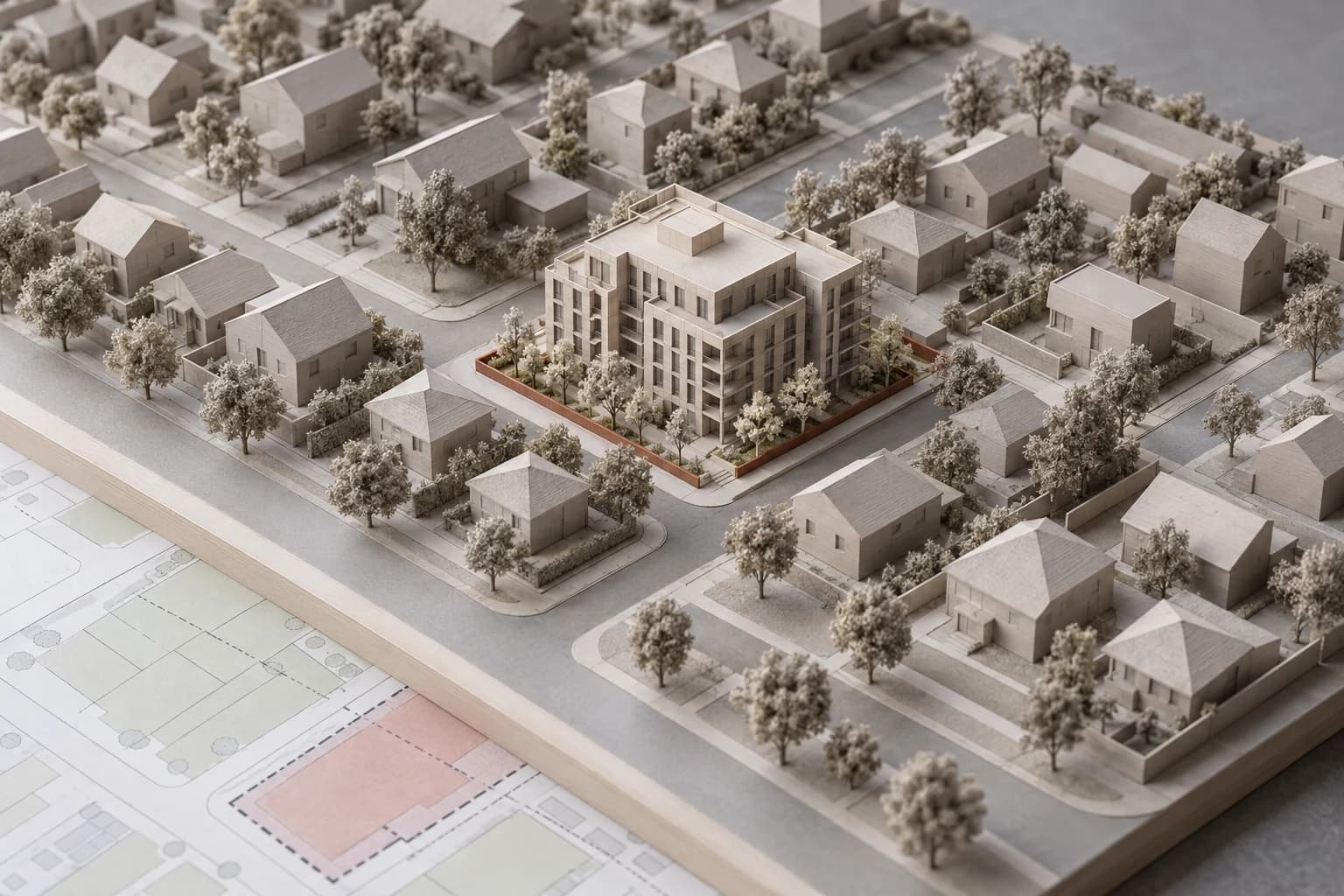
Evaluate the requested change against credible alternatives.
Compare existing zoning, candidate districts, the intended program, comprehensive-plan policy, approval findings, precedent, stakeholder conditions, and project economics.
The platform keeps by-right and lower-discretion alternatives visible while coordinating the evidence, design work, application requirements, engagement, schedule, and decisions needed for the requested change.
What gets evaluated
- Existing zoning, candidate zoning districts, and the physical and economic yield unlocked by each
- Comprehensive-plan, future-land-use, adopted-policy, and neighborhood-plan alignment
- Required findings, reviewing and decision bodies, procedural steps, timelines, and relevant precedent
- Likely issue areas, public-benefit rationale, stakeholder concerns, and potential project modifications
- By-right, conditional-use, lower-discretion, phased, and rezoning-dependent alternatives
What the team receives
- A rezoning feasibility and path assessment with material support, conflicts, and kill reasons
- Side-by-side program, approval, timing, cost, risk, and value scenarios
- Required findings, narratives, exhibits, supporting evidence, and unresolved application inputs
- A coordinated staff-review, stakeholder-engagement, submission, and hearing plan
How it moves the project forward
- 01
Shows what additional program and land value the zoning change may create
- 02
Makes the cost of added discretion visible across schedule, carry, redesign, engagement, and approval risk
- 03
Keeps a viable fallback path ready if the preferred request becomes unattractive or unattainable
See rezoning work on a real project.
Bring a site, an active request, or the rezoning path your team wants to evaluate.