Understand
Bring the site, jurisdiction, economics, requirements, risks, and decisions into one current view.
See the whole project from one current basis. Get a Demo
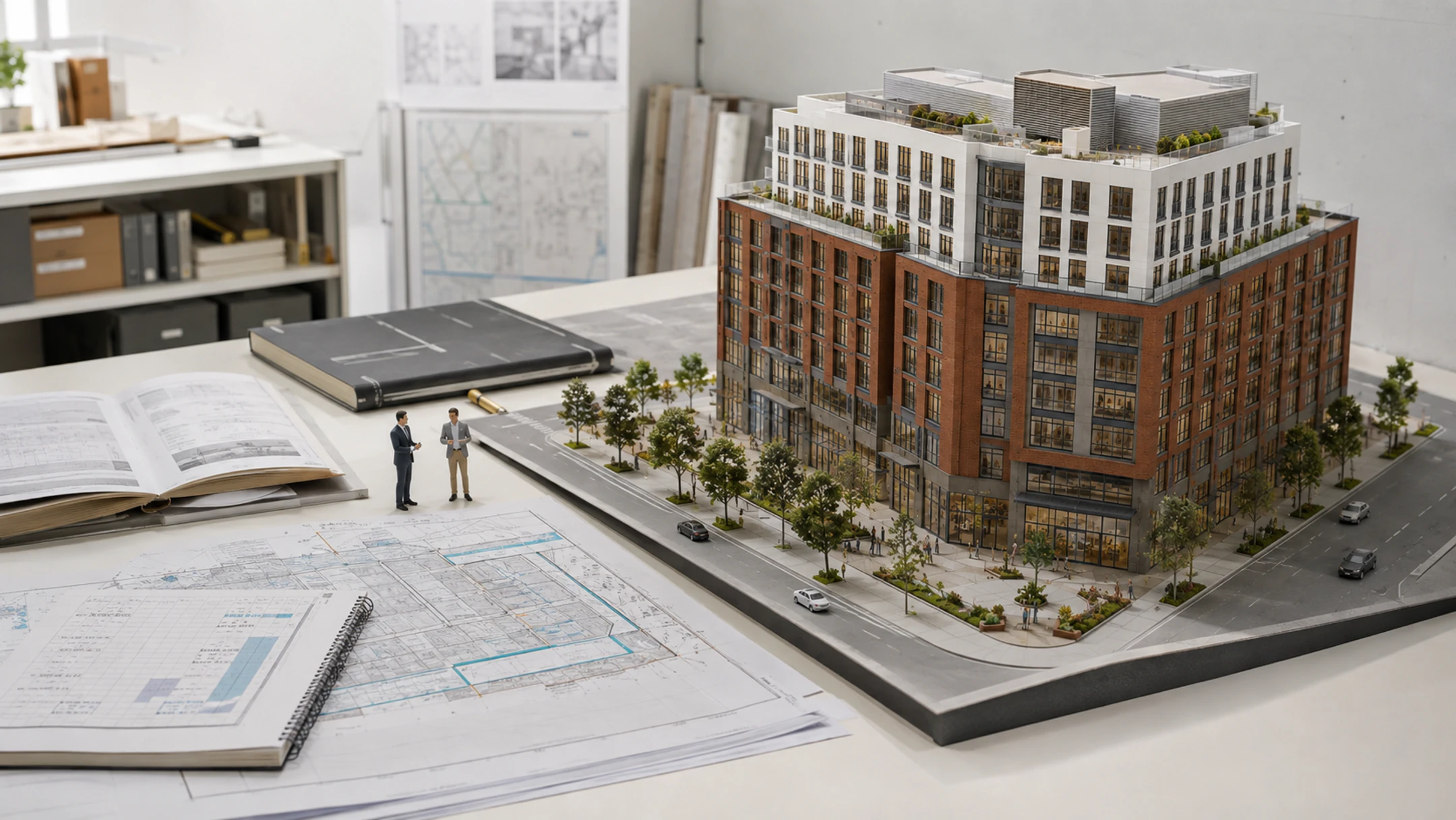
Bring site research, feasibility, development options, approvals, documents, deadlines, and authorized work into one current project environment.
Bring the site, jurisdiction, economics, requirements, risks, and decisions into one current view.
See the whole project from one current basis.
Compare viable paths across program, approvals, schedule, capital, risk, and return.
Compare paths against the project’s explicit priorities.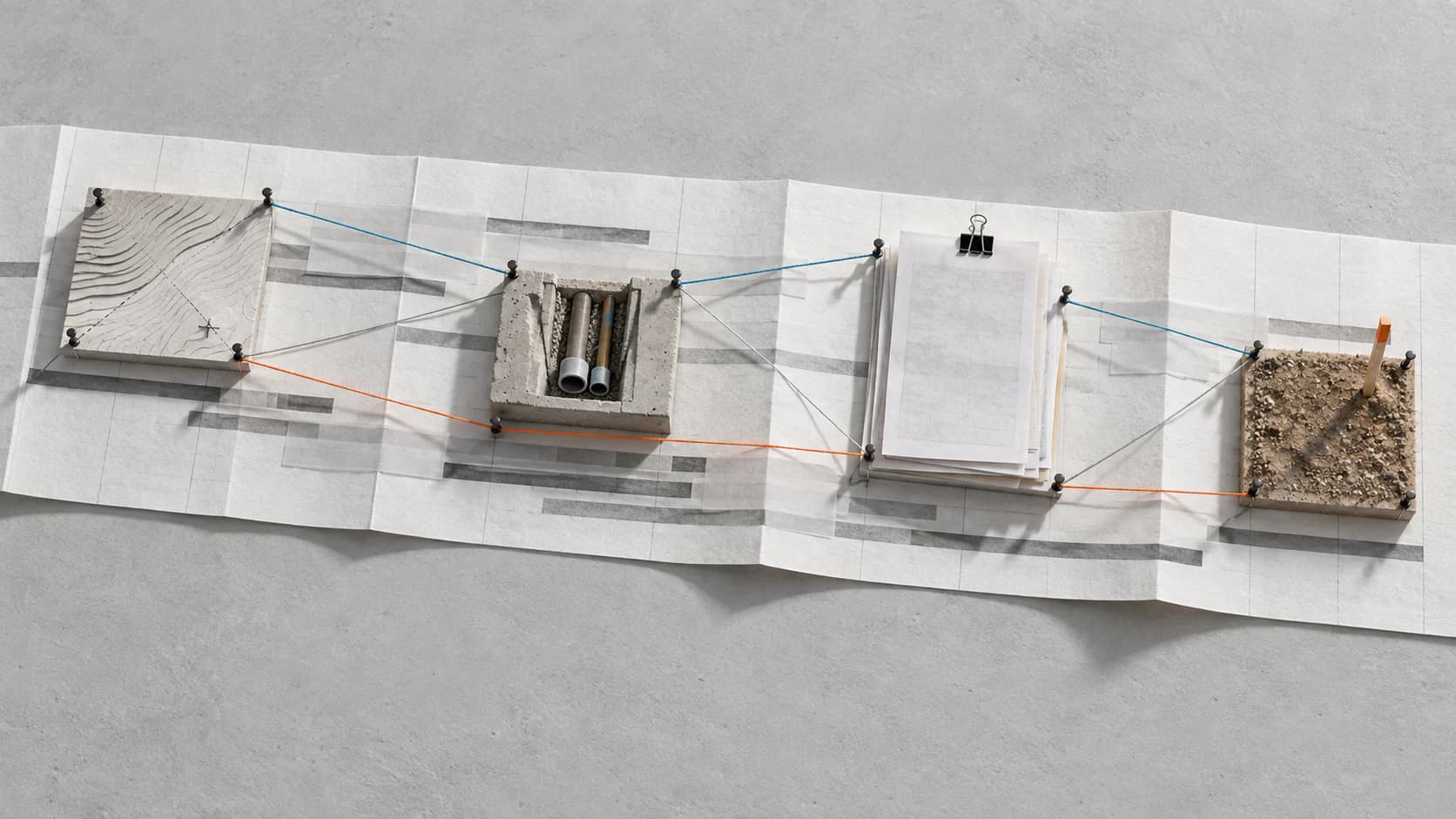
Connect the people, decisions, dependencies, deliverables, and deadlines that move the project.
Give every dependency context and ownership.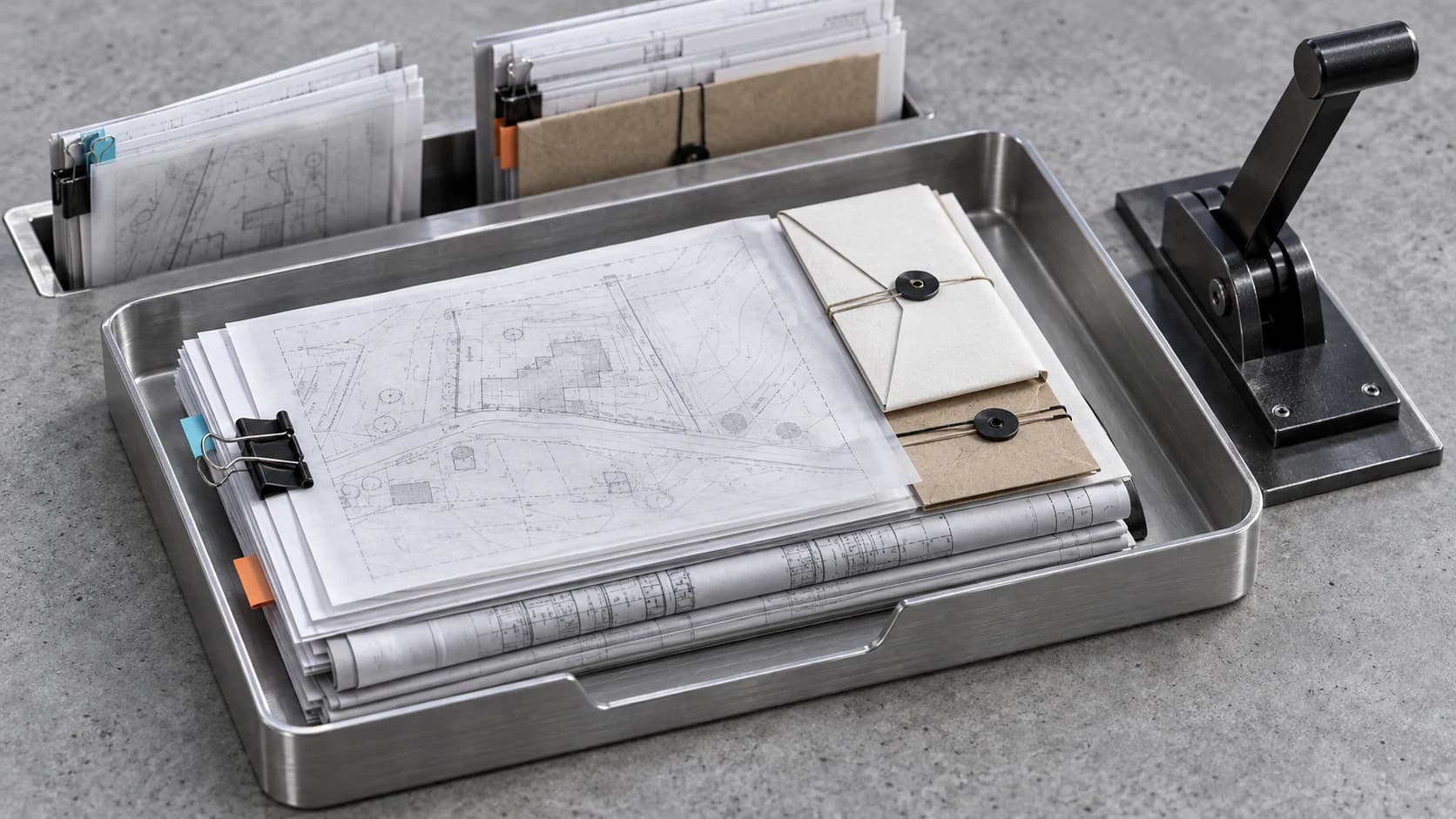
Prepare project-specific reports, permits, applications, requests, and submission packages.
Build reviewable work from current project information.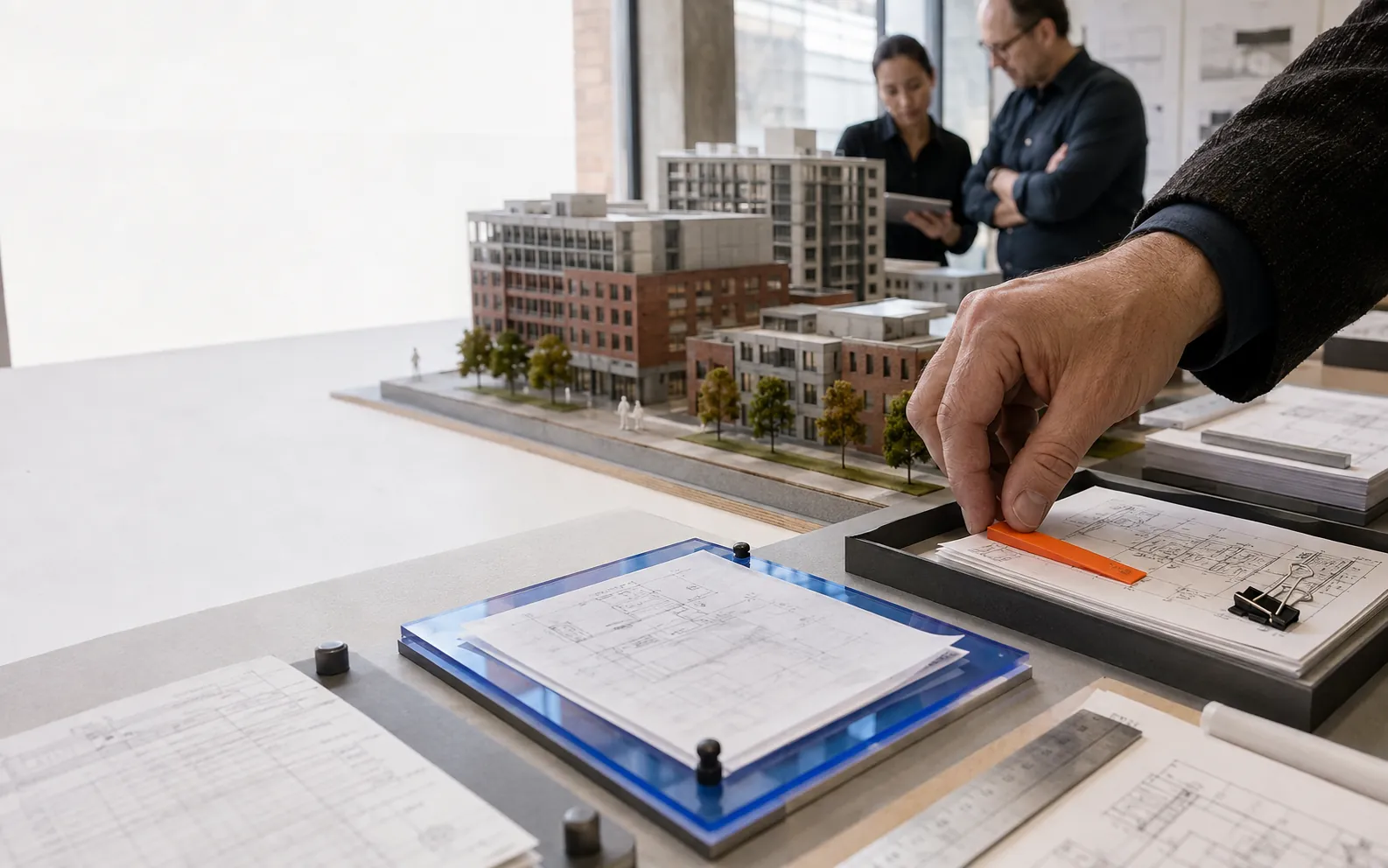
Prepare authorized research, communication, submission work, project-system updates, and follow-up for supported execution.
Move approved work forward, recording provider evidence only where a supported provider is connected.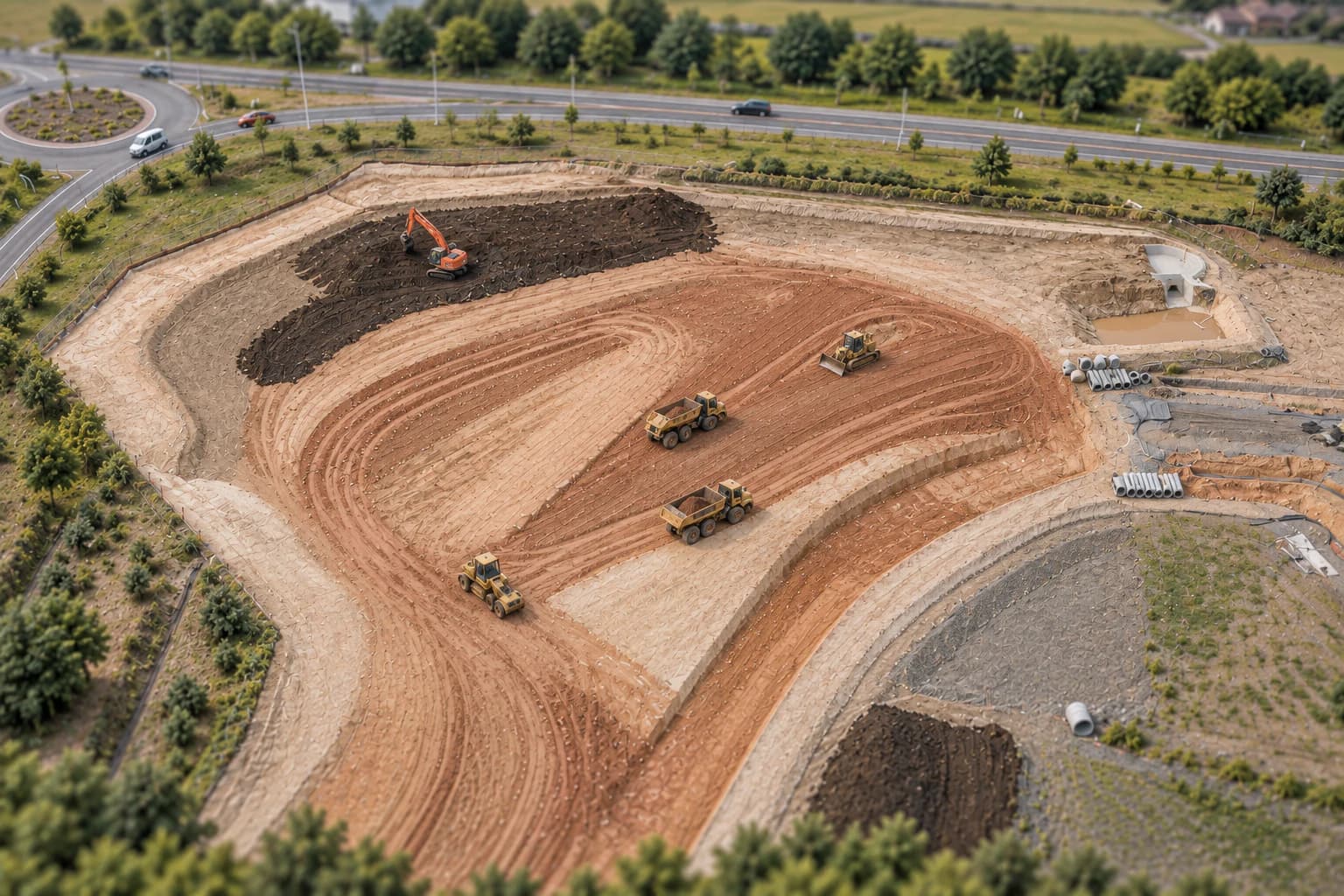
Keep changes, approvals, deadlines, decisions, actions, and readiness current and traceable.
Know what is complete and what still controls readiness.Go deeper where site, commercial, legal, approval, design, and infrastructure conditions determine what the project can become.
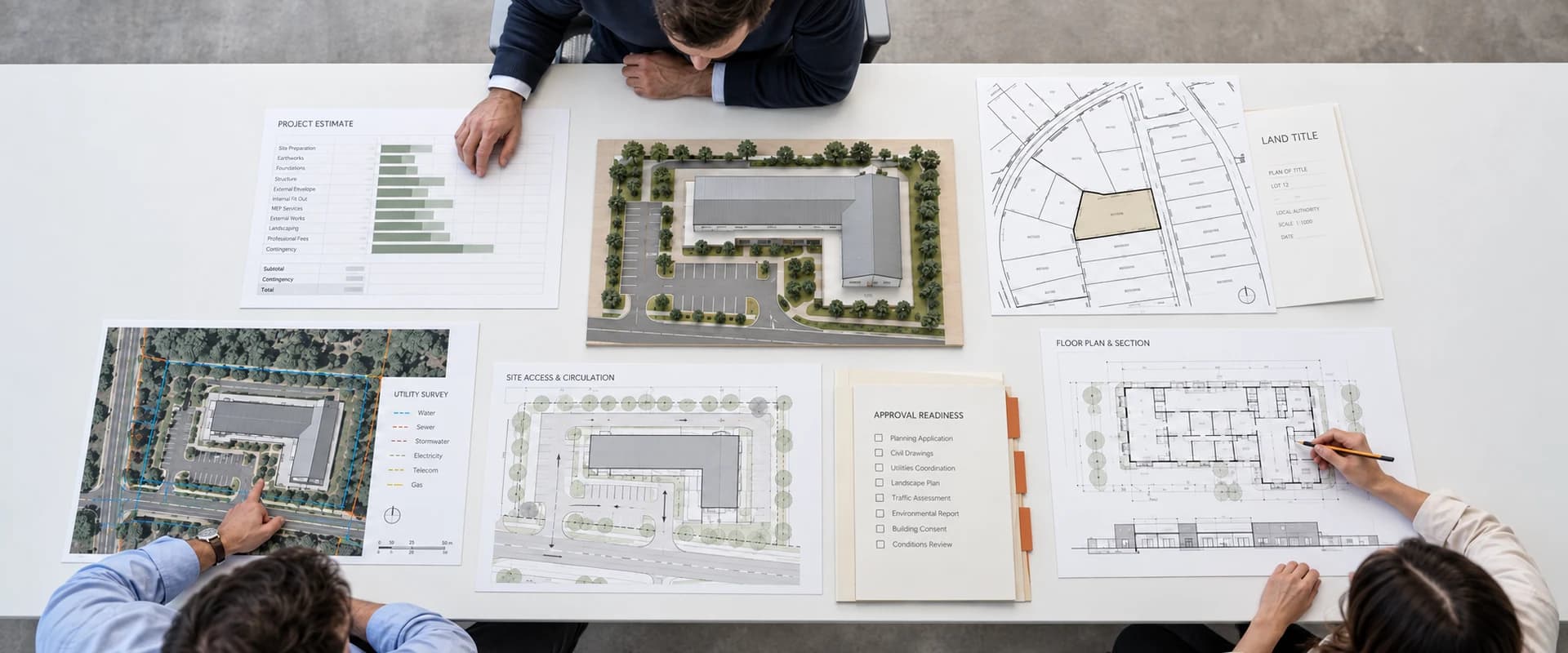
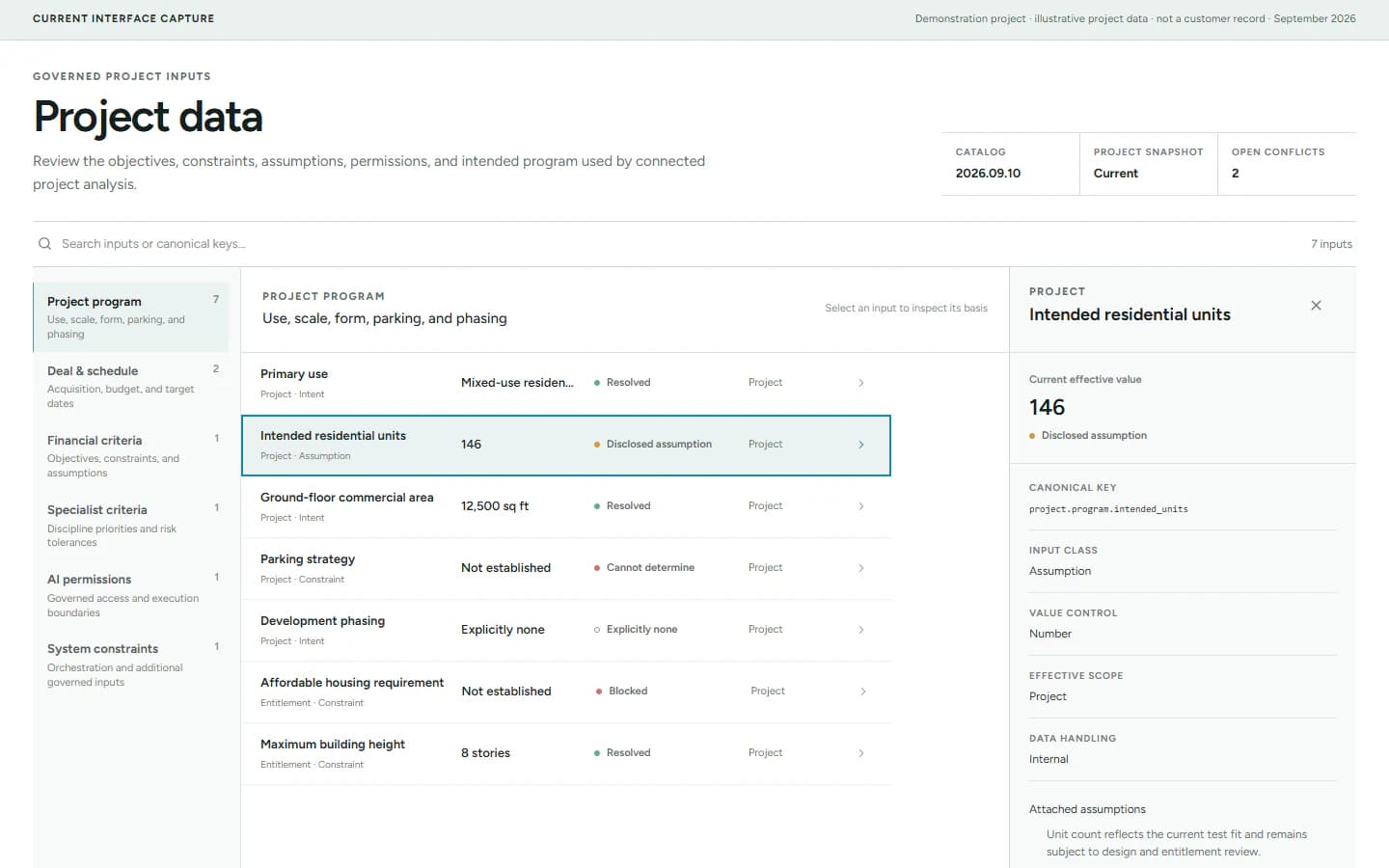
Current interface / governed project inputs
Review objectives, constraints, assumptions, permissions, and intended program in one place. Each value keeps its resolution state, scope, and supporting context visible.
Turn current project conditions and approved decisions into assigned or prepared work across research, analysis, coordination, communications, documents, submission preparation, and tracking. External completion requires evidence from a supported connected provider.

Define the owner, inputs, and completion standard for each approved decision or unresolved condition.
Coordinate research, analysis, communications, documents, submissions, and follow-up across parallel workstreams.
Require the right review and authorization before consequential work moves outside the project environment.
Attach completed work, responses, and changed conditions to the project so the next plan reflects what happened.
Explore different uses, designs, approval strategies, financing structures, and development phases. See how each option changes the project and compare it against your goals and constraints.

Review alternatives on the same project basis, then see how each choice changes capacity, design, infrastructure, cost, returns, approvals, risk, and timing.
Vary costs, rents, interest rates, approval timing, and other assumptions. See the point where an option stops working and refresh the comparison when new information arrives.
Find combinations that improve return, timing, capital needs, or risk while respecting the site and its requirements. Keep the recommendation, tradeoffs, and unresolved questions visible for the team choosing the path.
Every scenario keeps its inputs, sources, assumptions, method, and time basis. The analysis supports the decision; the team selects the path.
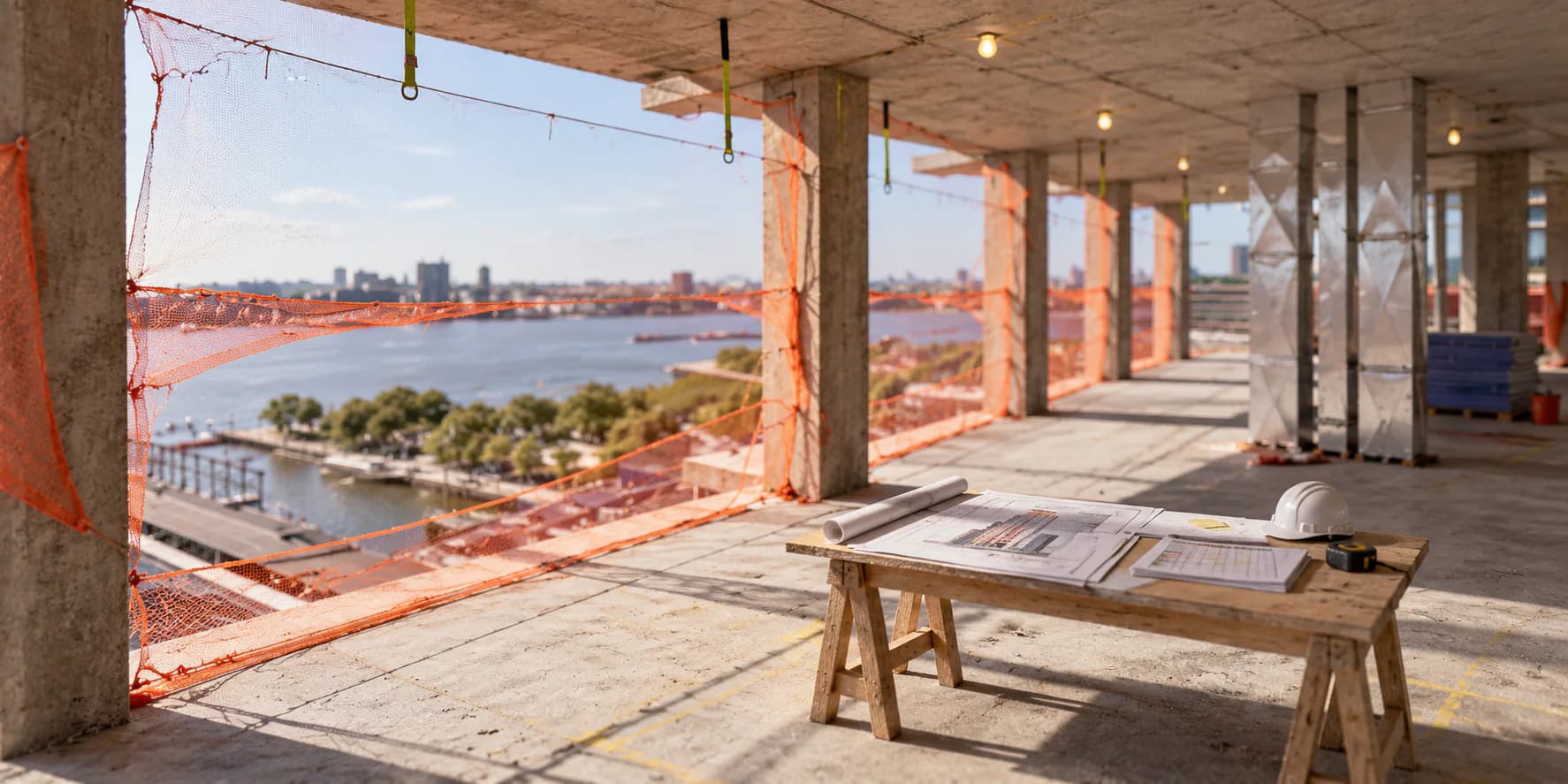
Keep requirements, decisions, documents, approvals, owners, and milestones in one current plan from first review to a defined construction-readiness target.
Keep official, contractual, calculated, estimated, and assumed timing distinct.
Draft documents, fill forms, assemble packages, request missing inputs, route reviews, and follow up on outstanding items. Package preparation does not prove submission, and external delivery requires a supported provider and its evidence.
Identify the forms, studies, exhibits, and supporting materials each application requires. Build a project-specific checklist, request outstanding inputs from the responsible people, and track what still needs to arrive.
Use current, governed project information and approved templates to prepare applications, reports, narratives, and correspondence. Reuse accepted information across documents to reduce repeated data entry and inconsistent details.
Organize documents, exhibits, and attachments into coordinated submission packages. Check completeness and flag missing fields, outdated information, conflicting details, and outstanding approvals before the package reaches reviewers.
Route drafts to the right people, track requested changes, and follow up on outstanding reviews or signatures. Give each reviewer the relevant context and make it clear which decisions are holding up the package.
Prepare approved packages for submission, preserve external confirmations when they are available, and track agency responses. Keep review comments, deadlines, and next actions connected to the project without implying delivery before a provider proves it.
Turn agency comments into response drafts and revised materials. Update affected drafts as project information changes, preserve previous versions, and flag anything that requires renewed review or approval.
Professional sign-off and final authorization stay with your team. Preparation, coordination, and follow-through operate within those permissions.
Distinguish facts, assumptions, calculations, professional inputs, and public records. Keep conflicts and unknowns visible until they are resolved.
Analyze, recommend, prepare, coordinate, and act only within company permissions. Keep consequential decisions with the responsible people.
Retain the basis, decision, authorization, output, action, and result. Then show what else must change with it.
Bring a site, an active development, or the pre-construction process your team wants to improve.