
Screen a site before the team commits
A disciplined first pass for finding fatal flaws, material unknowns, and the questions that must be answered before investment grows.
- Outcome
- A decision-ready initial site screen
Start with the decision, not the data room
Define what the team is deciding now. A first screen may support a pursue, pause, price-adjust, or decline decision. It should not pretend to complete every later diligence task.
Set the intended program, investment constraints, timing expectations, and risk tolerance before reviewing the site. These inputs determine which findings are material and which questions can wait.
- Decision and decision owner
- Intended program
- Timing and return constraints
- Risk tolerance
- Known non-negotiables
Assemble the minimum reliable project record
Bring parcel identity, ownership, boundaries, site context, known agreements, concept information, and available public records into one project view. Keep source dates and conflicts attached.
Missing information is an output. Record it explicitly, assign its consequence, and decide whether the team can proceed while it remains unresolved.
- Parcel and boundary records
- Ownership and title material
- Known site conditions
- Concept or target program
- Relevant agency and utility sources
Test the constraints that can change the deal
Review land use, entitlement, environmental, utility, access, civil, market, legal, and financial conditions together. A constraint in one area often changes assumptions elsewhere.
Separate hard stops from negotiable conditions, design problems, schedule exposure, cost exposure, and questions that need professional determination.
Compare credible paths before choosing one
A site is rarely represented by one fixed outcome. Test a lower-discretion path, the intended path, and at least one alternative that changes program, timing, capital exposure, or approval risk.
Do not collapse tradeoffs into one score. Show what each path gains, what it gives up, and which assumptions would change the recommendation.
Worked example: the site that almost looked simple
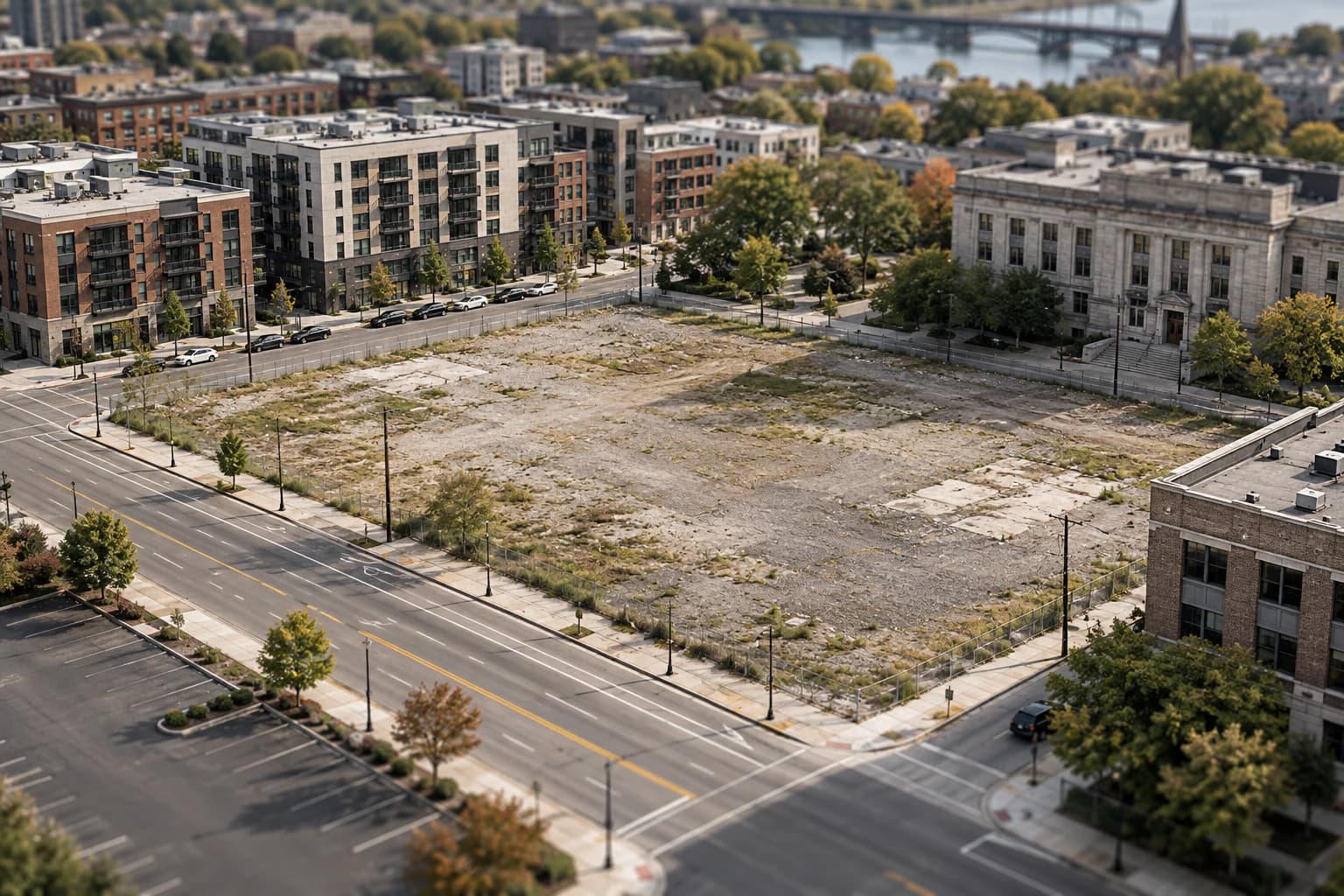
Consider an illustrative mixed-use site near a growing employment district. The parcel supports the target use, the concept fits, and the headline market story is attractive. A conventional screen might stop there and recommend pursuit.
A coordinated screen finds that the preferred access point depends on an adjacent parcel, the utility response is still preliminary, and the desired density requires a more discretionary approval path. None of those findings automatically kills the opportunity. Together, however, they change the schedule, earnest-money strategy, concept alternatives, and questions the team must resolve before increasing exposure.
The useful result is not a red or green score. It is a conditional pursue recommendation: preserve a lower-density path, secure an access diligence right, confirm utility capacity before the next deposit, and price the approval schedule into the investment case.
Watch for the screening shortcuts that create false confidence
A site screen becomes unreliable when the team treats public data as current without checking dates, assumes a concept proves legal capacity, or records an unresolved issue as a generic risk. It also fails when one discipline's conclusion never reaches the financial model or schedule it changes.
Use explicit states for unknown, conflicting, stale, unavailable, and requiring professional determination. These distinctions tell the team whether to verify a source, commission specialist work, change the concept, renegotiate a term, or stop work altogether.
- No unsupported pass or fail score
- No material source without a date
- No unknown without a resolution path
- No recommendation without stated conditions
Close with a decision record
Summarize the current project position, strongest path, material risks, unresolved questions, next actions, owners, and deadlines. The record should be usable by an investment committee and by the team expected to do the next work.
Keep the executive conclusion short, then attach the basis behind it. A reviewer should be able to move from the recommendation to the underlying parcel record, source, assumption, or open question without rebuilding the analysis.
- Recommendation and rationale
- Material risks and unknowns
- Alternative path
- Required follow-up
- Owner and decision date