
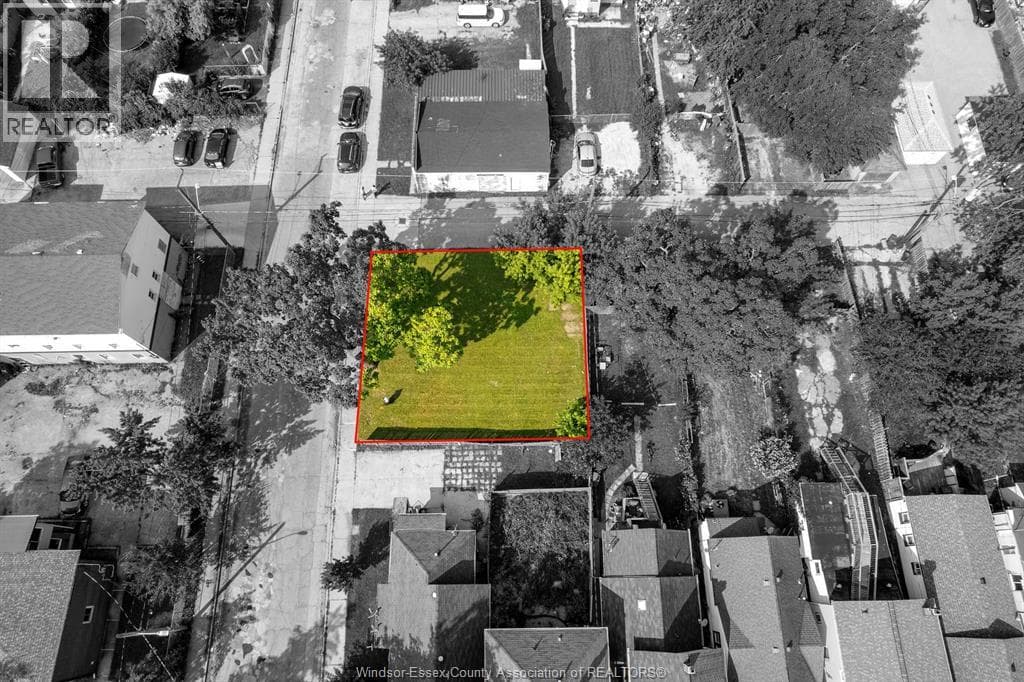
In real estate development, "good sites" fail all the time. Prime locations with strong demographics, transit access, and market demand quietly die in predevelopment. Meanwhile, objectively worse parcels—awkward lots, leftover industrial land, marginal corridors—end up getting built. This isn't randomness. It's a structural outcome of how entitlements, capital, and regulatory risk interact.
The projects that move forward are not always the best sites. They are the sites with the lowest friction profile across zoning, politics, timing, and financing.
A common pattern in cities like Los Angeles, Seattle, and Denver is that two parcels separated by a few hundred feet can sit in entirely different entitlement regimes. In Los Angeles, projects within Transit Oriented Communities (TOC) incentive areas qualify for density bonuses, parking reductions, and ministerial approval pathways. A site 600–700 feet outside the TOC radius may have similar market fundamentals but require discretionary approvals, environmental review, and political sign-off for the same unit count.
Developers routinely pass on "better" sites that miss incentive boundaries by a block, and instead pursue inferior parcels inside incentive geographies because the regulatory friction is dramatically lower. The quality of the site is outweighed by the predictability of the entitlement path. Over time, this produces a pattern where development clusters in zones defined by regulatory geometry, not urban quality.
High-quality sites tend to be visible. Visibility attracts stakeholders: neighborhood groups, historic preservation advocates, council offices, business improvement districts. That visibility increases political surface area. In San Francisco, projects along major corridors like Van Ness or Mission Street often face multi-layered scrutiny because they sit at the intersection of housing policy, transit planning, and neighborhood politics. Even when zoning allows development, the volume of stakeholder interest raises the probability of discretionary review, appeals, and process escalation.
By contrast, "bad" sites—remnant industrial parcels, underutilized commercial strips, or edge-of-neighborhood locations—often sit below the threshold of public attention. Fewer stakeholders engage. There are fewer appeals. Projects move faster not because the sites are better, but because fewer people feel ownership over them. Developers internalize this dynamic. The path of least resistance becomes the path of least controversy, even if the site is objectively inferior.
Some of the best-located parcels are burdened by legacy conditions that quietly kill feasibility. In many older urban cores, prime sites are encumbered by historic district overlays, nonconforming lot configurations, or outdated service access. For example, adaptive reuse projects in historic warehouse districts in cities like Minneapolis or St. Louis often face façade preservation requirements that severely constrain unit layout and window placement. These constraints don't show up in zoning summaries but materially reduce yield.
Meanwhile, greenfield or edge-of-core sites—often labeled "bad" due to weaker location fundamentals—offer clean title, simple lot geometry, and modern service access. The result is that inferior locations outperform superior ones in feasibility because the regulatory and physical constraints are lower. Developers are not choosing worse urban outcomes. They are choosing simpler constraint sets.
Institutional capital systematically favors projects with lower entitlement uncertainty, even when the underlying site is weaker. In practice, this means lenders and equity partners are more willing to fund a project on a marginal site with by-right zoning than a prime site requiring discretionary approvals, environmental review, or political negotiation. This dynamic is visible in suburban multifamily development patterns across the Sun Belt, where large volumes of capital flow to auto-oriented corridors with simple zoning regimes rather than to more complex urban infill sites with stronger long-term fundamentals but higher entitlement risk.
The non-obvious insight is that "bad sites" often win because they align better with the risk models of capital providers. The development ecosystem optimizes for projects that fit financing templates, not necessarily for projects that best serve urban demand.
Good sites tend to be the subject of long-range planning efforts: corridor plans, station area plans, neighborhood upzonings. These processes introduce timing risk. Developers who tie their feasibility to future zoning changes are effectively speculating on political calendars. Many projects die not because the site is wrong, but because the regulatory framework changes slower than capital markets. When interest rates rise, construction costs spike, or equity tightens, projects that were waiting on plan adoption or rezoning approvals simply run out of runway.
By contrast, "bad" sites that are already entitled or have simple, current zoning can move when capital is available. The market window closes before the planning window does. The projects that get built are the ones that can synchronize regulatory readiness with capital availability, not necessarily the ones with the best long-term fundamentals.
When developers assess sites, they are implicitly evaluating a friction profile: zoning complexity, political visibility, legacy constraints, environmental triggers, timing uncertainty, and financing fit. A "good" site can fail because its friction profile is too heavy, even if demand is strong. A "bad" site can succeed because its friction profile is light, even if the location is suboptimal.
This is why development patterns often appear irrational from a pure urbanist or market-demand perspective. The built environment reflects where friction was lowest at the moment capital was ready to move, not where the city most needed housing or mixed-use development.
The persistent mismatch between good sites and built sites is not a failure of developer judgment. It is a systemic outcome of how entitlement risk, political attention, and capital constraints interact. The sites that win are the ones that minimize uncertainty across regulatory, political, and financial dimensions at the same time.
Understanding this dynamic changes how "site quality" should be evaluated. Market fundamentals matter, but friction profiles matter more. The projects that get built are not the best sites. They are the sites where regulatory geometry, political visibility, and capital timing happen to align.