
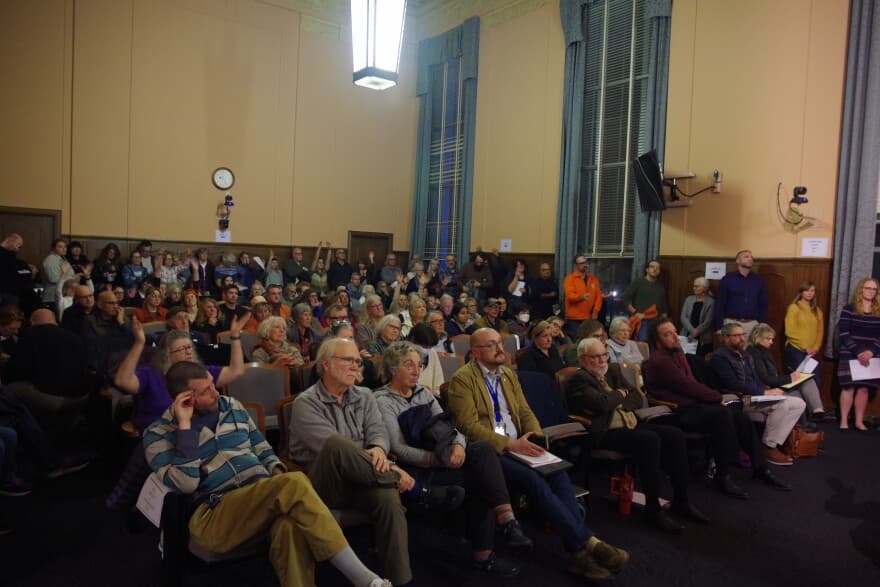
Planning commission meetings are often treated as the last formal step before a project moves into permitting. In practice, they are where unresolved risk surfaces. Not because commissioners are trying to block projects, but because commission is where procedural, political, and operational concerns finally intersect in public. Two real-world cases illustrate how projects that were technically viable left commission on a fundamentally different path than the one they entered on.
One example is the approval process for the Navigation Center at 33 Gough Street in San Francisco, a homeless services facility proposed by the City and County of San Francisco. While not a private development project, its entitlement process shows how commission dynamics can reshape timelines and scope. The project was consistent with zoning and city policy, but planning commission hearings became a venue for broader neighborhood concerns about safety, service concentration, and street impacts. As a result, commissioners requested additional operational conditions related to security staffing, service hours, and reporting requirements. These conditions did not change the land use classification, but they materially changed how the facility would operate and how the city had to staff and budget the project. The approvals were delayed while these conditions were negotiated, and the project timeline shifted as additional interdepartmental coordination was required. The risk that surfaced at commission was not zoning risk. It was operational and political risk that had not been fully addressed in the original entitlement package.
A different dynamic played out in Minneapolis during the planning commission review of multifamily projects proposed under the Minneapolis 2040 zoning framework, particularly along transit corridors like Nicollet Avenue. Several projects that complied with updated zoning allowances encountered commission scrutiny around winter operations, curb management, and emergency access. In one case, commissioners raised concerns about how trash collection and snow storage would function on a constrained block with high on-street parking demand. These questions triggered additional review by public works and fire departments after the hearing. The project was ultimately approved, but only after site circulation was revised to accommodate new access constraints and curb management plans. The commission meeting effectively reopened technical coordination that the development team believed had been resolved at staff level. The approval was not denied, but the project left commission with new design and operational constraints that reshaped the site plan and extended the entitlement timeline.
In both cases, the planning commission did not overturn the underlying policy framework that allowed the projects. What changed was the scope of what the projects were required to demonstrate before moving forward. The meeting became a forcing function for issues that had been implicit or deprioritized earlier in the process. The practical risk was not rejection. It was late-stage expansion of the entitlement surface area. Projects entered commission framed around land use and design compliance. They left framed around operational impacts and institutional comfort.
The lesson from these cases is that planning commission is where projects become exposed to the city's full problem set, not just the planning department's. Operational concerns, political sensitivities, and interdepartmental coordination often crystallize in this forum because it is the first point where unresolved questions are publicly tested. Projects that arrive at commission with unresolved operational narratives—how trash is handled, how access works under peak conditions, how impacts are managed after approval—are more likely to leave with added conditions, extended timelines, and new constraints that were not part of the original feasibility analysis.