
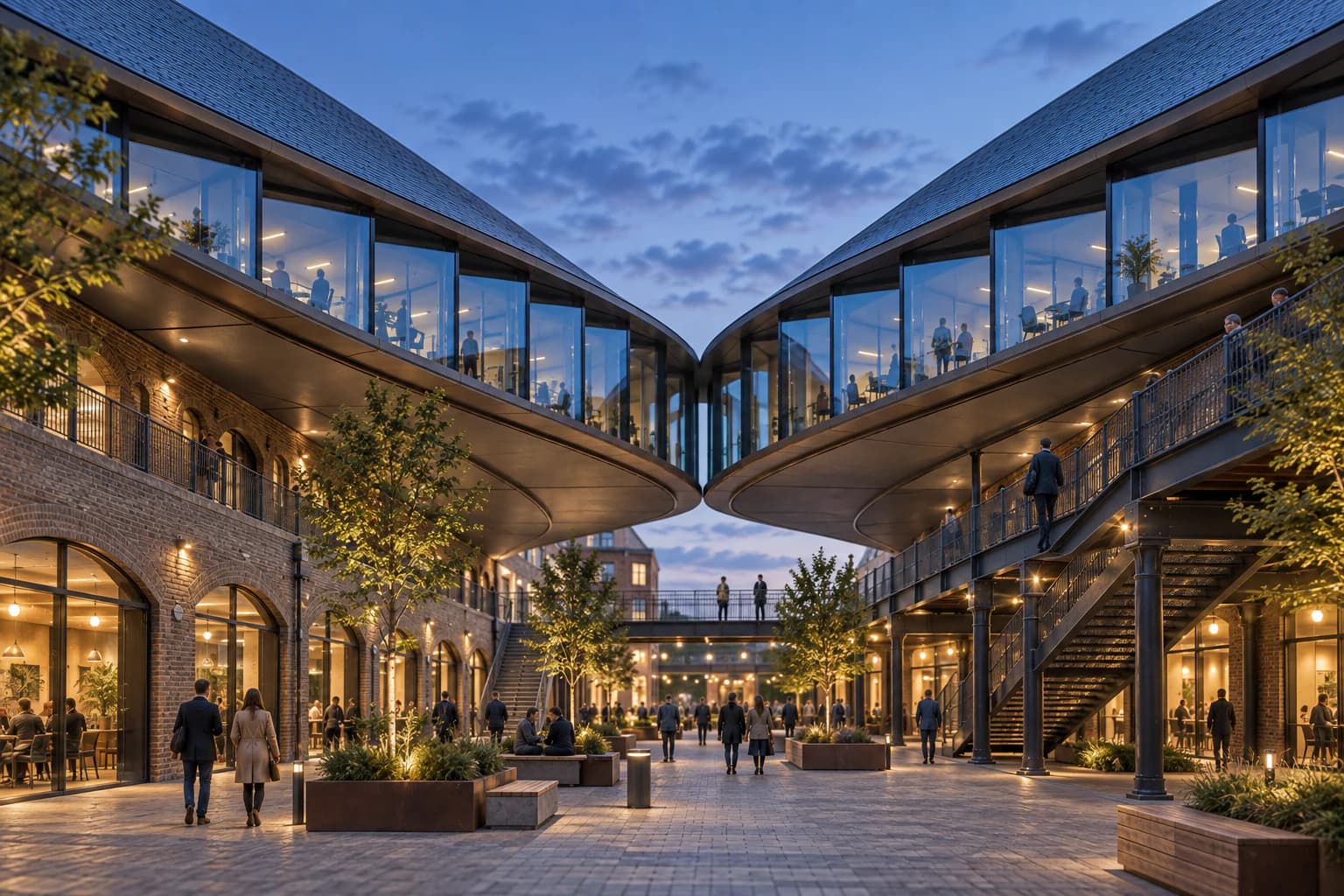
In early 2023, a mid-sized development firm out of the Midwest put a former auto-parts warehouse under contract in a secondary downtown corridor. The plan was straightforward: convert the 1960s concrete structure into 72 market-rate apartments with coworking on the ground floor. The building sat along a bus route, two blocks from a light industrial zone that the city had been actively trying to "reposition" toward mixed-use. On paper, it looked like a textbook adaptive reuse project.
The acquisitions director pulled the zoning summary from the city's GIS portal and confirmed the parcel was zoned MU-2, a mixed-use designation that allowed residential by-right. The development manager asked the architect for a quick feasibility massing study to confirm unit count and basic egress. The internal underwriting memo assumed a three-month entitlement window, largely limited to site plan review and standard building permits. No variances were anticipated.
The first issue surfaced during a routine pre-application meeting with planning staff. A senior planner mentioned that while the zoning allowed residential use, the building's depth triggered a minimum courtyard requirement buried in a design standard adopted after the zoning code. The existing warehouse footprint exceeded the maximum allowable "double-loaded corridor" depth for residential conversions. In practice, this meant the interior layout would need a carved-out light well to bring natural light to the center units. The architect hadn't accounted for this because the standard lived in a separate design manual, not the zoning code itself.
Carving out a courtyard dropped six units from the original count and forced a reconfiguration of the core. The structural engineer flagged that removing a section of slab would require reinforcing two existing columns. The cost estimate moved. The development manager updated the pro forma and sent a revised version to the lender, who responded by tightening the contingency requirement. The entitlement timeline hadn't slipped yet, but the project scope had quietly shifted.
Two weeks later, the civil engineer discovered that the alley behind the building was technically classified as a "service lane" rather than a public right-of-way. This mattered because the fire department required primary apparatus access from a public street for buildings over four stories. The project had been relying on rear access for fire separation and refuse. The fire marshal indicated that unless the alley was upgraded to city standards—something the developer would have to fund—the building would need a secondary fire stair and an expanded turnaround at the front curb. That curb expansion pushed into a protected bike lane recently installed by the city.
At this point, the project manager was coordinating between planning, fire, and public works. Each department was reasonable on its own. Together, their requirements conflicted. Public works resisted narrowing the bike lane. Fire wanted guaranteed apparatus access. Planning wanted to preserve the pedestrian-oriented frontage. The architect revised the ground-floor plan three times in ten days. The land use attorney began informal conversations with staff about whether an administrative modification could be granted or if the project would need to go before the zoning board for relief.
The trigger that turned a manageable review into a formal delay came from a historic preservation planner who flagged the building as a "contributing structure" within a locally designated industrial heritage district. The warehouse itself wasn't landmarked, but the district guidelines required that any exterior modifications visible from the street go through design review. The proposed window enlargements on the second and third floors were now subject to commission approval. That review body met once a month.
The development team missed the cutoff for the upcoming meeting by four days.
That single scheduling miss pushed the exterior review by five weeks. During that time, the lender paused issuance of a final term sheet, citing unresolved approval risk. The acquisitions director requested a purchase contract extension. The seller agreed, but only with a non-refundable deposit increase. Meanwhile, the architect held off on finalizing construction drawings because the façade treatment could still change based on commission feedback.
When the historic commission finally reviewed the project, they requested narrower window proportions and brick detailing to match adjacent industrial buildings. The changes were subtle, but they required new elevations and a revised material package. Those revisions, in turn, triggered another round of staff review to confirm compliance with the mixed-use design standards originally flagged in the pre-app meeting.
By the time the project received its final entitlement sign-offs, 6.5 months had passed. The project was still viable. The market hadn't turned. But the carrying costs, consultant fees, contract extension, and revised financing terms had added several hundred thousand dollars to pre-development expenses. None of the delays came from opposition to the project itself. They came from layered requirements that only became visible once design decisions were already in motion.
Looking back, the development manager summarized the experience bluntly: the project wasn't delayed by zoning in the abstract. It was delayed by the way zoning, design standards, fire access rules, historic guidelines, and internal scheduling collided in sequence. Each constraint was reasonable. The delay came from discovering them one at a time, instead of all at once.
That's the anatomy of a real entitlement delay. Not a denial. Not a headline-grabbing lawsuit. Just a normal project slowed down by the cumulative weight of rules, interpretations, and timing. The difference between a three-month path and a six-month path wasn't whether the project was allowed. It was when the real constraints surfaced—and how late in the process the team had already committed to a design that had to be unwound.